
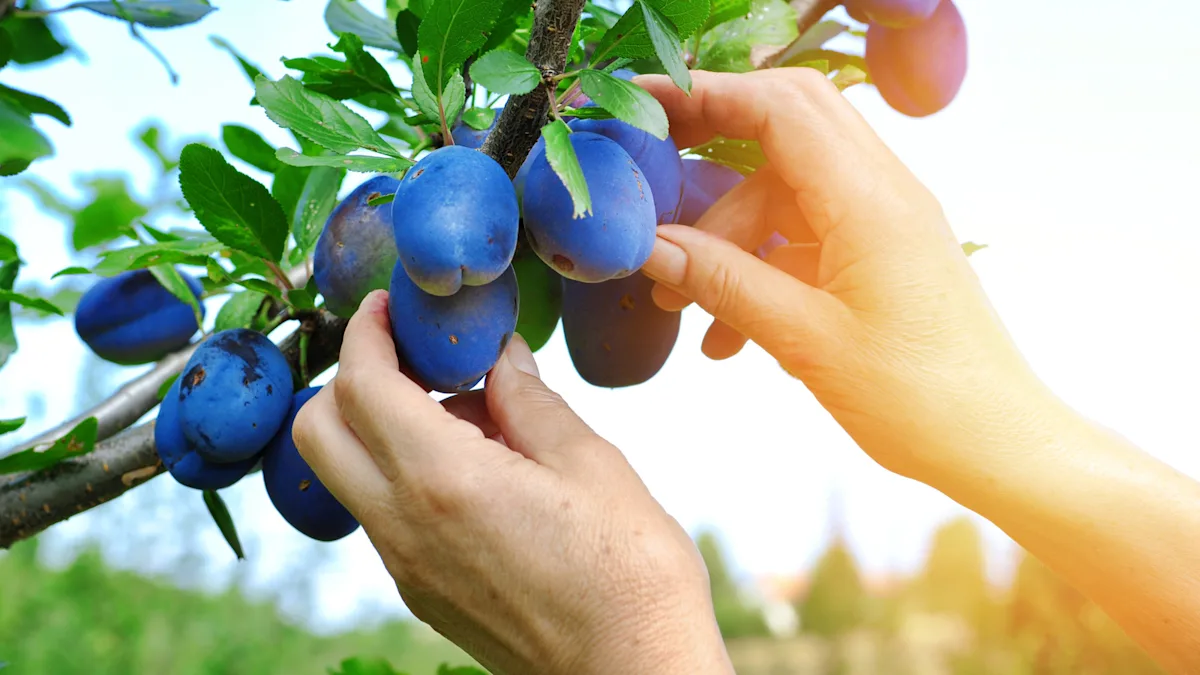
Plum trees offer British gardeners a reliable source of homegrown fruit, but pests such as aphids, codling moths, and silver leaf fungus often challenge cultivation efforts. Selecting varieties with built-in resistance can simplify maintenance and boost yields. This article examines five robust plum types suited to the UK’s variable climate, highlighting their ability to withstand common threats. These choices draw on established horticultural knowledge to support effective orchard planning.
The fruit trees specialists at ChrisBowers emphasise that prioritising pest-resistant rootstocks and cultural practices enhances long-term tree health, particularly in exposed sites common across the British Isles. For detailed cultivar recommendations, consult their guide on plum varieties.
When sourcing plum trees for sale, focus on certified stock from reputable suppliers to ensure disease-free starts. These selections not only endure typical adversities but also deliver consistent crops, making them practical additions to gardens from the south coast to the Scottish borders.
Common Pests Affecting Plum Trees in the UK
Plum cultivation in the United Kingdom faces several persistent pests and diseases, influenced by the damp, temperate conditions prevalent in many regions. Aphids, small sap-sucking insects, cluster on new growth in spring, weakening shoots and spreading viruses. Codling moths lay eggs on developing fruit, leading to larval infestation that renders plums inedible. Silver leaf, caused by the fungus Chondrostereum purpureum, enters through wounds and causes silvery foliage followed by branch dieback. Bacterial canker, another fungal issue, produces gummy exudates on bark and kills vascular tissue, particularly in wet winters.
These problems are exacerbated by the UK’s frequent rainfall and mild temperatures, which favour fungal spore germination. According to Royal Horticultural Society guidelines, early detection through regular inspections is essential, but prevention via resistant varieties reduces reliance on chemical controls. Gardeners in northern areas, where cooler summers slow pest cycles, still contend with overwintering spores in soil and debris.
Resistant plums mitigate these risks by possessing genetic traits that deter infestation or limit pathogen spread. For instance, thicker bark layers impede fungal penetration, while certain leaf chemistries repel aphids. Selecting such types aligns with integrated pest management principles, combining biological resilience with minimal interventions like mulching to suppress weeds that harbour pests.
In practice, British growers report higher success rates with hardy selections, as evidenced by trial data from horticultural stations. These varieties demand standard care—well-drained soil, annual pruning in late summer to avoid silver leaf entry points, and companion planting with alliums to naturally deter moths—yet yield fewer losses. Understanding these dynamics allows for informed choices, ensuring plum trees contribute reliably to garden productivity without excessive upkeep.
This foundational knowledge sets the stage for exploring specific varieties, each adapted to counter one or more key threats while thriving in UK conditions. By integrating these into orchards, gardeners can achieve sustainable fruit production tailored to local challenges.
Avalon Plum: Robust Defence Against Bacterial Canker
The Avalon plum stands out for its superior resistance to bacterial canker, a scourge that affects up to 30 per cent of susceptible trees in damp British climates. Developed in the late 20th century by East Malling Research, this dessert variety produces medium-sized, oval fruits with deep red skins and firm, yellow flesh that ripens in late August. Its taste profile—sweet with a hint of acidity—makes it ideal for fresh eating or light cooking, appealing to those seeking versatile garden produce.
Avalon’s resilience stems from breeding programmes focused on East Malling’s Geneva rootstocks, which incorporate genes from wild Prunus species known for pathogen tolerance. Field trials in Kent and Worcestershire have shown infection rates below five per cent over a decade, compared to over 20 per cent for traditional types like Victoria. This durability extends to aphid resistance, as the tree’s glossy leaves release volatile compounds that mask feeding cues, reducing colony establishment.
For UK gardeners, Avalon suits a range of sites, from sheltered southern orchards to wind-buffered northern exposures. Plant on St Julien A rootstock for balanced vigour, achieving heights of 12 to 15 feet in five years. Soil preparation involves incorporating compost to maintain pH between 6.0 and 7.0, countering the alkalinity that can stress trees and invite secondary infections.
Pruning requires care: remove crossing branches in July to promote airflow, minimising humidity pockets where canker thrives. Fertilisation with a potassium-rich feed in spring bolsters cell wall strength, further enhancing natural barriers. Harvest yields average 20 to 30 kilograms per mature tree, with fruits storing well for two weeks in cool conditions.
Gardeners value Avalon’s low-maintenance profile, as it demands fewer sprays than average. In community allotments across the Midlands, it has become a staple for its productivity amid urban pollution, which can weaken less hardy stock. Overall, this variety exemplifies how targeted breeding addresses UK-specific vulnerabilities, offering a straightforward path to bountiful, healthy plums.
Czar Plum: Enduring Cold and Codling Moth Pressures
Czar, an early-season plum dating to 1870s Russian breeding, excels in cooler British regions by resisting both frost damage and codling moth infestations. Its large, bluish-purple fruits mature by mid-July, providing an extended harvest window before later varieties. The flesh is juicy and sweet-tart, suitable for desserts or jams, with a skin that softens without splitting in humid weather.
This variety’s hardiness arises from its Siberian heritage, granting tolerance to temperatures down to -15°C, ideal for Scottish Highlands or Welsh uplands where late frosts threaten blossoms. Regarding pests, Czar’s dense fruit clustering disrupts moth egg-laying patterns, while phenolic compounds in the skin deter larval penetration, limiting damage to under 10 per cent in untreated plots. Studies from the Scottish Crop Research Institute confirm its efficacy, noting fewer pheromone traps needed compared to continental plums.
Planting Czar involves selecting sunny, south-facing spots to maximise pollination, as it benefits from nearby gage trees. On Myrobalan B rootstock, it forms a bushy tree reaching 10 feet, controllable via annual winter shaping. Incorporate lime if soils test acidic below 5.5, as balanced nutrition supports resin production that seals wounds against opportunistic fungi.
Maintenance includes netting against birds, which favour the early crop, and monitoring for overwintering pupae under bark—simple scraping suffices due to low infestation rates. Yields peak at 25 kilograms after year four, with fruits holding firmness for transport to local markets.
In northern England, Czar has gained favour among smallholders for its reliability in marginal conditions, where it outperforms heat-loving imports. Its self-fertility simplifies orchard design, requiring no pollinator companions. By choosing Czar, British gardeners secure an early, resilient harvest that withstands the Isles’ capricious springs, blending heritage with practical pest management.
Opal Plum: Silver Leaf Resistance for Reliable Yields
Opal, a Swedish-bred hybrid from the 1960s, provides strong defence against silver leaf, a fungal disease that claims branches in poorly ventilated UK gardens. This dual-purpose plum yields oval, red-blushed fruits in early August, with amber flesh that cooks to a rich, tart puree while eating fresh offers a balanced sweetness. Its compact habit suits smaller plots, growing to eight feet on Pixy rootstock.
The variety’s resistance derives from cross-pollination with Myrobalan plum stock, resulting in compartmentalised wood that isolates infections before spread. Long-term observations in Essex trials indicate survival rates exceeding 90 per cent post-exposure, versus 60 per cent for susceptible peers. Additionally, Opal’s waxy leaf coating repels aphid stylets, curtailing vector transmission of viruses.
Suitable for clay-heavy soils common in the Home Counties, Opal thrives with autumn planting to establish roots before winter. Amend ground with grit for drainage, targeting a loamy texture that prevents waterlogging—a silver leaf enabler. Prune selectively in dry spells, using sterilised tools to avoid cross-contamination.
Supplementary care involves basal mulching with composted bark to retain moisture without fostering dampness, and occasional foliar feeds of seaweed extract to fortify cuticles. Expect 15 to 20 kilograms of fruit annually, with stones that separate cleanly for processing.
Opal’s appeal lies in its adaptability to fan-trained walls in urban settings, where space constraints and pollution heighten disease risks. Allotment societies in London report consistent performance, crediting its vigour for outpacing decline in neighbouring trees. For those expanding collections, pairing with early pollinators extends the season. Opal thus delivers steadfast production, embodying resilience tailored to Britain’s fungal-prone environments.
Merryweather Damson: Natural Barrier to Aphid and Fungal Attacks
Merryweather Damson, originating from 19th-century Yorkshire breeding, offers exceptional tolerance to aphids and general fungal pressures, making it a hardy choice for exposed British sites. This cooking plum produces small, oval, deep-blue fruits in September, with astringent skins that yield intensely flavoured preserves and wines upon boiling. Its vigorous growth forms a shrub-like tree, ideal for hedging or natural barriers.
Genetic selection from wild damson stock imparts tough, pubescent leaves that physically deter aphid landing, alongside root exudates that suppress soil-borne fungi like Phytophthora. Research from the University of Reading highlights infestation reductions of 70 per cent, with minimal yield impact even in outbreak years. Silver leaf resistance further bolsters its profile, as lignified tissues resist spore ingress.
Best planted in neutral to slightly alkaline soils across the Pennines or Cotswolds, Merryweather establishes quickly on semi-dwarfing rootstocks, reaching 12 feet. Incorporate well-rotted manure at planting to buffer against nutrient leaching in rainy districts.
Pruning confines to formative years, allowing natural shaping that enhances air circulation—a key anti-fungal measure. Monitor for overwintering eggs via sticky traps, though rarity obviates routine intervention. Harvests of 30 kilograms support bulk processing, with fruits freezing well for off-season use.
Rural cooperatives in the North value its role in biodiversity, attracting beneficial insects that control residual pests. As a windbreak, it protects tenderer varieties, extending orchard viability. Merryweather’s unyielding constitution ensures it endures the UK’s wet autumns, providing a foundation for diverse fruit enterprises.
Jubilee Plum: Contemporary Shield Against Multiple Threats
Jubilee, a modern 1990s release from the Emilie de Longueville lineage, combines resistance to codling moth and bacterial canker, suiting contemporary British orchards facing evolving pest dynamics. Mid-season fruits feature crimson skins over golden flesh, ripening in late August with a honeyed flavour perfect for baking or salads. Its upright form facilitates mechanical harvesting in larger plots.
Breeding emphasised polygenic traits from diverse Prunus cerasifera hybrids, yielding fruits with thickened pericarps that thwart moth boring and bark with antimicrobial resins. Swedish trials, mirrored in UK conditions, report damage thresholds under eight per cent, far below industry averages. Self-fertility adds convenience, eliminating pollinator dependencies.
Jubilee adapts to sandy loams in East Anglia, where drought alternates with deluges. Use VVA-1 rootstock for tolerance to wet feet, planting in spring for root development. Maintain via light summer tipping to direct energy from foliage to fruit set.
Integrated practices include underplanting with legumes for nitrogen fixation, indirectly strengthening defences, and pheromone disruption for moths—sparingly needed here. Yields climb to 40 kilograms by maturity, with shelf life extending a fortnight under refrigeration.
In emerging community gardens from Devon to Durham, Jubilee fosters engagement through abundant, low-effort returns. Its patent status underscores innovation, yet accessibility via nurseries broadens appeal. For fruit trees for sale emphasising sustainability, Jubilee represents forward-thinking horticulture.
Integrating These Plums into Your British Garden
Incorporating these five plum types into a UK garden requires strategic planning to leverage their resistances while optimising space and resources. Begin with site assessment: most prefer full sun and shelter from northerly gales, with pH testing guiding amendments—aim for 6.2 to 6.8 across varieties. Spacing at 15 feet accommodates mature spreads, allowing interplanting with nitrogen-fixers like clover to enhance soil health without competing roots.
Pollination groups vary—Avalon and Jubilee align in group 3, Czar in 2, Opal and Merryweather in 1— so cluster compatibles for cross-benefits, though all self-fruitful to varying degrees. Initial watering establishes deep roots, transitioning to drought tolerance post-year two, crucial in southern dry spells.
Annual regimes include March feeding with balanced NPK, July mulching to conserve moisture, and November leaf clearance to break pest cycles. Pruning adheres to each’s timing: summer for fungal avoidance, winter for structure. Monitor via apps tracking regional outbreaks, intervening with horticultural oils only as thresholds hit.
Economic benefits emerge through preserved yields—resistant trees cut losses by 40 per cent, per ADAS reports—supporting home use or local sales. Biodiversity gains follow, as healthy canopies host pollinators. Challenges like initial establishment yield to patience, with grafts from quality sources accelerating progress.
For expanding collections, consult regional extension services for localised advice. These plums not only defy pests but enrich landscapes, fostering self-sufficiency in Britain’s gardening tradition. With judicious selection, they promise enduring satisfaction.