
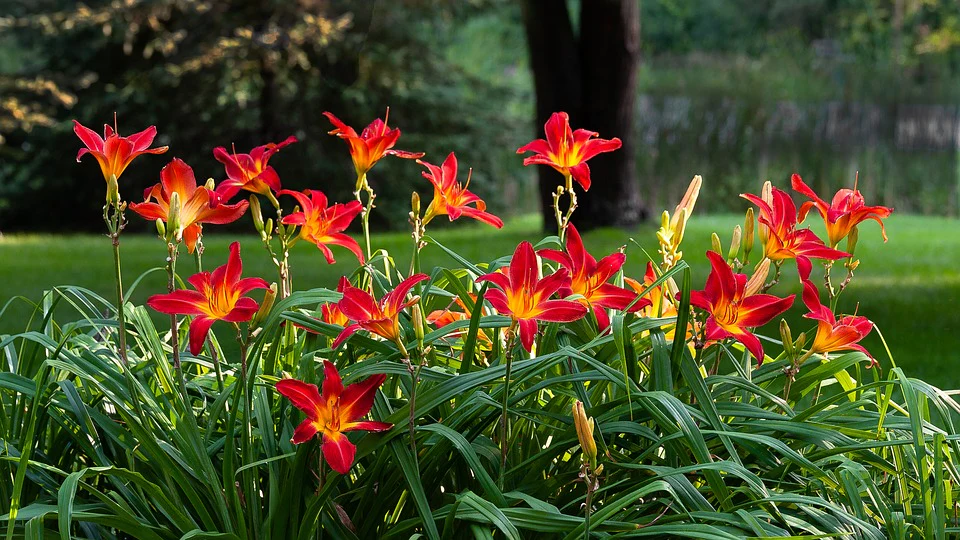
Daylilies have an adaptability to various soil types and tolerance for partial shade which makes them a practical choice for gardeners seeking low-maintenance displays. This article outlines five straightforward combinations involving daylilies and complementary perennials, designed to maintain visual appeal from early June through September. These pairings leverage the extended bloom periods of certain daylily cultivars alongside plants that offer contrasting textures and hues, ensuring a cohesive garden border or bed.
For gardeners new to these arrangements, sourcing quality stock is essential. Daylily plants for sale from reputable suppliers ensure healthy roots and vigorous growth, setting the foundation for successful plantings. Leading cultivators at https://swallowtail-daylilies.com/ emphasise the importance of selecting reblooming varieties to sustain interest across the season, noting that such choices harmonise well with perennials of similar stature (reblooming daylilies). This approach not only extends the display but also supports pollinator activity in domestic settings.
The Benefits of Daylily Combinations in UK Gardens
Incorporating daylilies into mixed borders enhances garden aesthetics while addressing practical considerations such as soil erosion control and biodiversity. In the UK’s temperate climate, where summers can vary from mild and damp to occasionally dry, daylilies excel due to their robust root systems that retain moisture effectively. Pairing them with other perennials creates layered planting schemes that mitigate the gaps left by individual bloom cycles, a common challenge in seasonal gardens.
One key advantage lies in the diversity of flower forms and foliage. Daylilies produce trumpet-shaped blooms in shades ranging from lemon yellow to deep burgundy, often on scapes rising 60 to 90 centimetres tall. When combined thoughtfully, these elements create depth and movement. For instance, the fine foliage of some companions softens the bolder leaves of daylilies, preventing a monolithic appearance. Gardeners in regions like the Midlands or Scotland, where light levels fluctuate, benefit from this balance, as it optimises light reflection and shadow play.
Maintenance remains minimal across these combinations. Most require full sun to partial shade and well-drained soil amended with organic matter. Pruning spent flower stems encourages reblooming, while dividing clumps every three to four years prevents overcrowding. In terms of pest resistance, daylilies and their partners generally deter common issues like slugs through natural deterrents such as aromatic foliage in certain pairings.
From an ecological perspective, these mixes attract bees, butterflies, and hoverflies, contributing to garden health without chemical interventions. The Royal Horticultural Society endorses such plantings for their role in supporting native wildlife. Economically, establishing these beds proves cost-effective over time, as perennials return annually, reducing the need for seasonal replanting.
To implement effectively, assess your garden’s microclimate. South-facing aspects suit sun-loving groups, while north-facing spots favour shade-tolerant options. Soil testing kits, available at local garden centres, guide amendments like lime for acidic conditions prevalent in parts of Wales. With initial preparation, these combinations yield reliable results, transforming ordinary plots into structured, enduring features.
Combo 1: Daylilies with Salvia ‘May Night’ for Purple Depth
This pairing unites the upright spikes of Salvia ‘May Night’ with the rounded blooms of daylilies, creating a vertical emphasis that draws the eye upward. Salvia, a perennial salvia with deep indigo flowers from late spring to midsummer, contrasts sharply against the softer petals of daylilies such as ‘Stella de Oro’, a compact rebloomer in golden yellow. The result is a mid-border display that maintains intensity through July, when salvia’s faded stems give way to daylily’s second flush.
In practical terms, both plants thrive in the UK’s free-draining loams, requiring similar spacing of 45 centimetres to allow air circulation and reduce fungal risks like powdery mildew. Plant salvia at the rear, its 60-centimetre height providing a backdrop, while daylilies occupy the foreground. Mulching with bark chips conserves moisture during drier spells, a consideration for southern English gardens.
The colour interplay enhances perceived vibrancy; purple salvia tempers the warmth of yellow daylilies, evoking a sense of calm sophistication suitable for cottage-style layouts. Foliage adds further interest: salvia’s grey-green leaves offer a silvery undertone that complements daylily’s strap-like greenery. Pollinators favour this duo, with salvia’s nectar-rich spikes buzzing alongside daylily anthers.
For variety, substitute ‘May Night’ with Salvia nemorosa ‘Caradonna’ for a more intense blackish-purple. Daylily alternatives include ‘Happy Returns’, which reblooms reliably in cooler climates like northern England. Establishment takes one season, after which the bed requires only occasional deadheading. Water newly planted specimens weekly until rooted, then rely on rainfall. This combination suits exposed sites, as both exhibit wind resistance, making it ideal for coastal areas in Devon or Cornwall.
Over time, the salvia may self-seed mildly, adding serendipitous pops of colour without invasiveness. Gardeners report heightened satisfaction from the prolonged display, which bridges early and late summer seamlessly. In larger schemes, intersperse with low-growing sedums for ground cover, though this core duo stands alone effectively.
Combo 2: Daylilies and Black-Eyed Susans for Sunny Contrasts
Black-eyed Susans (Rudbeckia fulgida ‘Goldsturm’) pair seamlessly with daylilies to deliver a burst of golden radiance that persists from July into September. The daisy-like flowers of rudbeckia, centred by chocolate-brown discs, offset the tubular forms of daylilies like ‘Hyperion’, whose pale lemon blooms evoke a lighter mood. This arrangement suits sunny borders, where the plants’ shared preference for full exposure maximises flowering.
Spacing at 50 centimetres accommodates rudbeckia’s 75-centimetre spread, preventing competition for resources. In UK gardens, incorporate compost at planting to bolster fertility, particularly in clay-heavy soils common to the Home Counties. The duo’s drought tolerance once established aligns with variable summer weather, requiring irrigation only during prolonged dry periods.
Texturally, rudbeckia’s coarse petals provide a rugged counterpoint to daylily’s silkier surfaces, while seedheads left standing offer winter structure. This extends the bed’s utility beyond summer, appealing to year-round gardeners. The warm palette fosters a welcoming atmosphere, ideal for patio-adjacent plantings.
Pollinator appeal is notable; rudbeckia’s flat blooms serve as landing pads for bees, complementing daylily’s deeper cups. For diversification, try Rudbeckia ‘Little Goldstar’ for a dwarf version in smaller plots. Daylily ‘Pardon Me’ introduces red tones, adding complexity without overwhelming the scheme.
Maintenance involves cutting back rudbeckia in autumn to curb self-seeding, though controlled spread enhances naturalised looks. Daylilies benefit from post-bloom fertilisation with a balanced NPK formula. In northern regions, where frosts arrive early, this combo’s hardiness (both zone 3-9 equivalents) ensures survival. Gardeners in Yorkshire appreciate its resilience against heavy rains, which the plants channel effectively via fibrous roots.
This pairing’s ease extends to propagation: divide rudbeckia every few years, coinciding with daylily splits. The result is a self-sustaining bed that evolves subtly, rewarding patience with escalating blooms.
Combo 3: Daylilies Paired with Sedum ‘Autumn Joy’ for Late-Season Extension
Sedum ‘Autumn Joy’, with its succulent rosettes and broccoli-like flowerheads shifting from pink to rust, extends daylily displays into autumn. Combined with reblooming daylilies such as ‘Autumn Red’, whose maroon flowers echo sedum’s maturing tones, this duo bridges midsummer peaks to September frosts. The fleshy leaves of sedum retain water, suiting drier inland gardens.
Position sedum centrally at 40-centimetre intervals, flanked by daylilies for a mounded effect. Both prefer neutral pH and minimal feeding, thriving in unamended borders—a boon for organic practitioners. In the UK’s variable light, sedum’s tolerance for poor soils complements daylily’s adaptability.
The progression of colours—from daylily’s summer vibrancy to sedum’s dusky palette—creates narrative depth, preventing abrupt seasonal endings. Foliage contrast is subtle yet effective: sedum’s glaucous blues against daylily greens evoke serene landscapes.
Attracting butterflies, sedum’s flat tops provide late nectar, while daylilies sustain earlier visitors. Opt for Sedum ‘Herbstfreude’ as a synonym for ‘Autumn Joy’, or pair with daylily ‘Canadian Border Patrol’ for yellow accents. This suits rockeries or gravel gardens in the Cotswolds.
Care is straightforward: avoid overwatering to prevent rot, and stake sedum if laden with blooms. Divide every four years to maintain vigour. In wetter western areas, raised beds improve drainage. The combination’s longevity—up to a decade per plant—offers value, with sedum’s architectural form persisting through winter.
Gardeners value this for its low stature, fitting under windowsills or along paths. The subtle drama unfolds gradually, aligning with contemplative British gardening traditions.
Combo 4: Daylilies and Coneflowers for Pollinator-Friendly Borders
Coneflowers (Echinacea purpurea) and daylilies form a robust alliance, their daisy-form petals in pinkish-purple harmonising with daylily cultivars like ‘Romantic Return’ in apricot shades. Blooming concurrently from June to August, this pair ensures constant activity, with coneflowers continuing into early autumn.
Plant in groups of three, spaced 60 centimetres, in sunny, humus-rich soil. Echinacea’s deep taproots stabilise slopes, a practical feature for terraced gardens in hilly regions like the Pennines. Both resist deer browsing, a perennial issue in rural settings.
Visually, coneflowers’ raised centres add dimension to daylily flats, while seedheads invite birds. The purple-yellow scheme evokes meadow authenticity, suitable for wildlife corridors.
Echinacea ‘Magnus’ offers superior form; pair with daylily ‘Gentle Shepherd’ for cream elegance. Maintenance includes autumn cleanup to deter mildew, though resilience is high.
This combo enhances biodiversity, drawing goldfinches to coneflower seeds. In urban plots, it softens hardscapes. Its straightforward nature appeals to time-pressed households.
Combo 5: Daylilies with Ornamental Grasses for Textural Movement
Ornamental grasses like Miscanthus sinensis ‘Morning Light’ introduce sway and whisper to daylily beds, their arching fronds framing blooms of ‘Ed Brown’ in peach. Flowering from midsummer onward, grasses plume in September, prolonging the scene.
Space at 90 centimetres for grasses’ spread, with daylilies infilling. Both favour moist, fertile loams, ideal for Thames Valley clays.
The linear grasses contrast daylily’s clumping habit, adding dynamism. Silvery variegation in ‘Morning Light’ brightens shaded edges.
Switchgrass (Panicum virgatum) serves as a lower alternative; ‘Heavy Metal’ blue foliage pairs with burgundy daylilies. Cut grasses in February for tidiness.
This evokes prairie serenity, fitting contemporary designs. Wind tolerance suits exposed sites.
Final Considerations for Lasting Summer Displays
Selecting these combinations requires attention to aspect and scale. Rebloomers ensure continuity, while companions fill voids. Monitor for aphids, treating organically. These beds evolve, offering enduring pleasure in British gardens.