
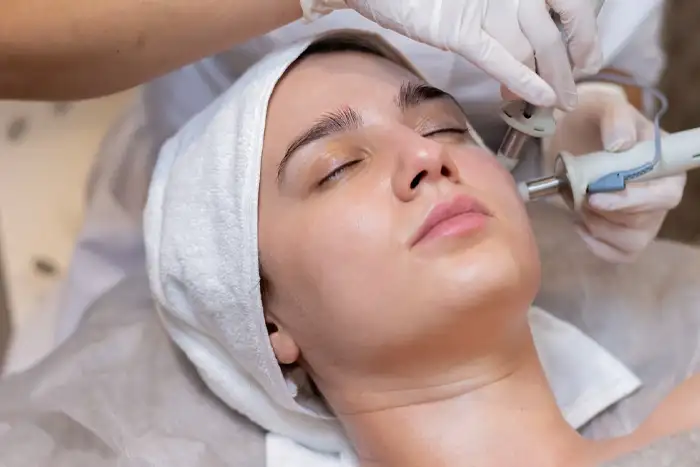
Most people do not walk into a skin clinic asking for a specific machine or a fashionable treatment name. They usually arrive with a practical concern: acne marks that have lingered for years, redness that never settles, lines that makeup no longer softens, or skin that looks dull even when they are doing everything right at home. In London, where work, commuting, pollution, hard water, indoor heating and irregular sleep can all show up on the face, clinics often approach treatment planning less as a menu and more as a process of elimination. The best suggestions are usually the ones linked to a visible problem, a realistic timeline and a maintenance plan that fits ordinary life.
Medspa ‘s laser hair removal specialist says that people searching for a beauty clinic London should focus less on whether a treatment is currently popular and more on whether it matches the condition of the skin barrier, the depth of the issue and the likely recovery time. That is sensible advice because results in clinic settings rarely come from one dramatic appointment alone. They come from choosing a method with a clear job to do, then repeating it at sensible intervals while avoiding products or habits that undo the progress.
What makes this especially relevant in London is the range of skin concerns clinics see every week. The city’s pace means many patients want improvement that is visible but still manageable around office days, school runs or social plans. That has pushed clinics towards treatments with measurable outcomes rather than vague promises. When practitioners repeatedly suggest the same procedures, it is usually because they work for a broad set of concerns, adapt well to different skin types when used correctly, and can be combined with home care in a way that feels realistic. The five treatments below are often recommended for exactly those reasons.
Chemical peels for tone, congestion and post-breakout marks
Chemical peels have been around for a long time, but they continue to be suggested because they solve several common problems at once. A peel uses carefully chosen acids to loosen the bonds between dead skin cells, accelerate turnover and improve how the surface reflects light. That sounds technical, but the visible effect is straightforward: skin often looks clearer, smoother and more even after a course of treatment. In a city where late nights, stress and air pollution can leave skin looking tired and congested, that reliability matters.
Clinics do not usually recommend one generic peel for everyone. A superficial salicylic-based peel may be chosen for oily or acne-prone skin because it works well inside the pore lining and can help reduce blockages. Glycolic or lactic acid peels are often suggested when the main issue is uneven tone, rough texture or mild early pigmentation. Mandelic acid may be preferred for some patients because it can be gentler while still helping with breakouts and discolouration. The point is not the acid name alone but the match between the formula and the problem being treated.
One reason peels remain popular is that they can be scaled. A patient new to clinic treatments may start with a lighter peel to test tolerance and protect the barrier. Someone with longstanding post-inflammatory marks may move through a series over several months. This staged approach suits many London patients because it allows visible progress without demanding lengthy downtime. Light flaking for a few days is often easier to manage than a full week of social withdrawal.
The results are also easier to explain than with some trend-led treatments. Peels help when the problem is sitting near the surface: dullness, uneven tone, shallow acne marks, mild pigmentation and congestion. They are less useful for deeper scarring, significant laxity or pronounced broken capillaries, and a good clinic should say so. That honesty is part of what separates useful treatment planning from sales language.
Peels are also an example of why consultation matters. Active eczema, an impaired skin barrier, certain prescription products, recent sun exposure or a history of unusual pigmentation responses may change the recommendation. For people trying to choose a beauty clinic London service based only on price, that can be easy to miss. A cheap peel applied without proper skin assessment can create irritation rather than improvement. Done properly, though, peels remain one of the most efficient ways to refresh the skin and set up better results from everything else that follows.
Microneedling and radiofrequency microneedling for texture and collagen support
If chemical peels are often suggested for surface correction, microneedling is frequently recommended when the issue sits a little deeper. Standard microneedling uses very fine needles to create controlled micro-injuries in the skin. The purpose is not damage for its own sake but stimulation: the healing response encourages collagen production and can gradually improve texture, fine lines and some forms of scarring. It is one of the treatments clinics return to because the logic is clear, the results accumulate over time and the treatment can be adapted with care to different ages and concerns.
For many London patients, the appeal lies in the balance between visible improvement and manageable recovery. The skin may look red for a short period, but the downtime is often modest compared with stronger resurfacing approaches. That matters for people fitting appointments around work meetings or commuting. The longer-term benefit is that microneedling is not just polishing the surface. It is often chosen because it can influence how the skin behaves as it repairs itself.
Radiofrequency microneedling adds heat energy delivered through insulated needles, which allows clinics to target deeper tissue more aggressively. This is why it is commonly suggested for acne scarring, enlarged pores and mild skin laxity. The radiofrequency element can tighten tissue while the needling stimulates repair, making it a more results-focused option for those who need more than a glow treatment. In practical terms, clinics may suggest standard microneedling for early textural issues and radiofrequency versions when there is more obvious scarring or looseness.
That does not mean it is suitable for every face at every moment. Active acne lesions, certain inflammatory skin conditions and poorly controlled sensitivity can make timing important. A thoughtful practitioner will usually want the skin calmer before starting a course. They should also be realistic about the pace of change. Deep rolling scars and longstanding textural irregularities usually improve gradually over a series, not after one session. Patients who understand that tend to be happier because they are judging the treatment against the right standard.
Microneedling is also a good example of why skin clinics often recommend combination plans. A person with acne marks may have one part of the problem on the surface, where peels or pigment management can help, and another part in the dermis, where needling is more relevant. London clinics that see a high volume of patients often build treatment around these layers rather than reaching for a single all-purpose answer. That layered thinking is one of the fresher ways to understand why certain treatments keep appearing in recommendations: they fit into a broader strategy instead of pretending to do everything at once.
Laser and light-based treatments for redness, pigmentation and stubborn unevenness
Laser and light-based treatments often enter the conversation when skin concerns are visually obvious yet resistant to skincare. Redness, sun damage, patchy pigmentation and visible vessels are common reasons clinics suggest them. This category includes several technologies rather than one single treatment, which is why good consultations are so important. Intense pulsed light, pigment-focused lasers and vascular lasers all do slightly different jobs, and the distinction matters more than the marketing name.
In London, these treatments are often recommended because so many patients present with chronic low-grade redness, old sun exposure, uneven tone or a tired complexion that does not respond to serums alone. Hard daily routines, indoor heating and outdoor stressors can make redness more noticeable. Equally, years of incidental ultraviolet exposure can leave pigment scattered across the cheeks, forehead or upper lip. Clinics often turn to light-based treatments because they can target the colour problem directly, whether that colour is brown pigment or red vascular change.
The strongest case for these treatments is precision. A vascular laser can be suggested when facial redness or visible thread veins are the main complaint because it is designed to target blood vessels selectively. Pigment-oriented devices may be used for sun spots or mottled tone. Intense pulsed light is often recommended when a patient has mixed concerns, such as mild redness plus diffuse pigmentation, and wants a general brightening effect with some correction built in. This targeted approach can make them feel more results-driven than treatments that simply exfoliate or hydrate.
Results, however, depend heavily on skin selection and aftercare. Not every skin tone is suited to every device, and that is one reason reputable clinics do not oversimplify laser treatment. Patch testing, full medical history and discussion of melasma risk or post-inflammatory pigmentation are not formalities; they are central to safety and outcomes. Patients with deeper skin tones can absolutely be treated, but the technology and settings need careful choice. Any clinic that skips this nuance is not being serious enough.
What London clinics often appreciate about well-chosen laser or light treatment is that it can shift a problem that people have learned to hide with makeup. Redness can look calmer. Sun spots can fragment and fade. The skin can appear less blotchy without looking done. That makes these treatments especially attractive for people who want visible change that still reads as natural in office lighting and everyday life. They are not always the first step, but when clinics suggest them, it is usually because simpler measures have limits and targeted energy offers a clearer route to change.
Injectables and skin boosters when the issue is movement, volume or dehydration from within
Not every skin concern is a surface issue. Some are structural. Lines deepen because muscles repeatedly fold the skin. Shadows form because volume shifts. Skin can look flat and tired because hydration is poor at a deeper level even when moisturiser use is consistent. This is why clinics often suggest injectables, although the term covers different treatments with very different purposes.
Anti-wrinkle injections are generally recommended when expression lines are becoming fixed or when muscle movement is contributing to a tired or tense appearance. The goal, when handled well, is not a blank expression but a reduction in repetitive motion that creases the skin. In London, demand has moved towards subtler correction. Many patients want to look less drawn at work or less cross in photos, not dramatically altered. That has led better clinics to frame these treatments as dosage decisions rather than all-or-nothing interventions.
Dermal fillers are suggested more selectively than they once were, but they remain relevant when true volume loss is the issue. Cheeks that have flattened, marionette shadows that have deepened, or a mouth area that looks unsupported can all lead a clinic to discuss filler. The important point is that filler is not a general beautifying product. It should be linked to anatomy and proportion. Overcorrection is what gives filler a poor reputation; careful correction is why clinics still suggest it.
Skin boosters sit somewhere between classic skincare and structural injectables. They are often recommended for crepey, dehydrated or tired-looking skin because they aim to improve hydration quality and skin condition rather than obvious shape. This makes them appealing to patients who want the skin to look healthier rather than larger, tighter or more sculpted. In practical terms, clinics may suggest skin boosters for early ageing changes, smoker’s lines or dullness that does not respond well to facials and topical products.
What makes injectable treatments results-driven is not speed alone but specificity. A clinic may recommend peels for uneven tone, laser for redness and anti-wrinkle injections for forehead lines because each tool addresses a different mechanism. That is more useful than expecting one treatment to solve every visible change. It also explains why a good clinic spends time discussing what will not improve. Fine surface pigmentation will not disappear because of filler, and static lower-face heaviness may not be solved by anti-wrinkle injections alone. Patients benefit most when clinics match the treatment to the real cause rather than the nearest trend.
Medical-grade facials, hydrafacial-style treatments and the value of maintenance
It is easy to dismiss facials as non-essential when compared with peels, lasers or injectables, yet skin clinics still recommend certain facial treatments for a reason. The key distinction is between a spa-style pampering session and a clinic facial with a defined purpose. Many practices use hydrafacial-style systems, deep cleansing protocols, enzyme resurfacing, LED support and barrier-focused treatments not because they produce dramatic transformation in one sitting, but because they maintain skin function between stronger procedures and sometimes prepare the skin for them.
This matters in London because many visible complaints are worsened by neglecting basics. A person may have invested in a peel course or a laser session but still be dealing with heavy congestion, dehydration from over-cleansing or a compromised barrier from too many active products. In those cases, a clinic facial can be more useful than something harsher. It can reset the skin, reduce inflammation, remove debris and help restore tolerance so that future treatment works better.
Hydrafacial-style treatments are often suggested when patients want immediate freshness without downtime. They combine cleansing, exfoliation, extraction and infusion in a controlled format. The results are usually temporary but noticeable: smoother texture, less congestion and a cleaner look overall. For events, presentations or periods when skin feels tired and overloaded, clinics recommend them because they provide a visible lift without pretending to rebuild collagen or erase pigmentation.
LED-based facials and barrier repair treatments are also increasingly used as part of a broader treatment plan. Blue light may be discussed for acne-prone skin, while red light is often positioned as supportive for healing and inflammation management. On their own, these are not usually the most dramatic options in a clinic, but that does not make them trivial. A calmer barrier and a more stable inflammatory response can determine whether stronger treatments are tolerated well.
The reason clinics still suggest maintenance facials is that results-driven care is not only about the biggest intervention. It is about keeping the skin in a state where the right intervention has a fair chance to work. For patients who cannot commit to more invasive treatments, consistent professional maintenance may also be the most realistic route. That does not mean a facial replaces a laser when broken capillaries are the problem, or filler when volume has clearly been lost. It means clinics often use these treatments to protect gains, improve skin behaviour and reduce the need for repeated overcorrection.
How to judge recommendations sensibly in a London clinic setting
The fact that these five treatments are commonly suggested does not mean they are always being suggested well. Patients still need a way to tell the difference between appropriate guidance and a polished sales process. One of the most useful questions is simple: what is this treatment specifically meant to change, and what will it not change? Good practitioners answer directly. They can explain whether they are targeting pigment, blood vessels, collagen, oil congestion, muscle movement or hydration quality. They can also say when the problem lies outside the treatment’s reach.
This is especially important in a city where the clinic market is crowded. The phrase beauty clinic London will return endless options online, but choice is not the same as clarity. A reliable clinic usually takes photographs, reviews medical history, discusses timing and aftercare, and explains the likely number of sessions before treatment starts. It is also willing to slow down. If the skin barrier is inflamed, if sun exposure has been recent, or if expectations are unrealistic, postponing treatment may be the most professional recommendation.
Another sensible check is whether the clinic builds around your life rather than around its most expensive device. A results-driven plan considers commuting, office attendance, budget, tolerance for downtime and willingness to maintain home care. It may include a combination of peels, maintenance facials and occasional energy-based treatment rather than pushing a single premium procedure. That kind of planning tends to produce steadier, more believable improvement.
Finally, the most useful treatment recommendations are usually the least theatrical. They do not promise perfect pores, instant collagen or permanent age reversal. They describe a mechanism, a series and a realistic degree of change. That is why these five treatments come up so often. They are not universal answers, but they are dependable tools in skilled hands. In a London clinic setting, where people want results that fit normal routines and still look like themselves, that dependability is exactly what keeps them on the list.